STAUBFRAU
by Maria Milisavljević
Director: Jula Marie Kühl
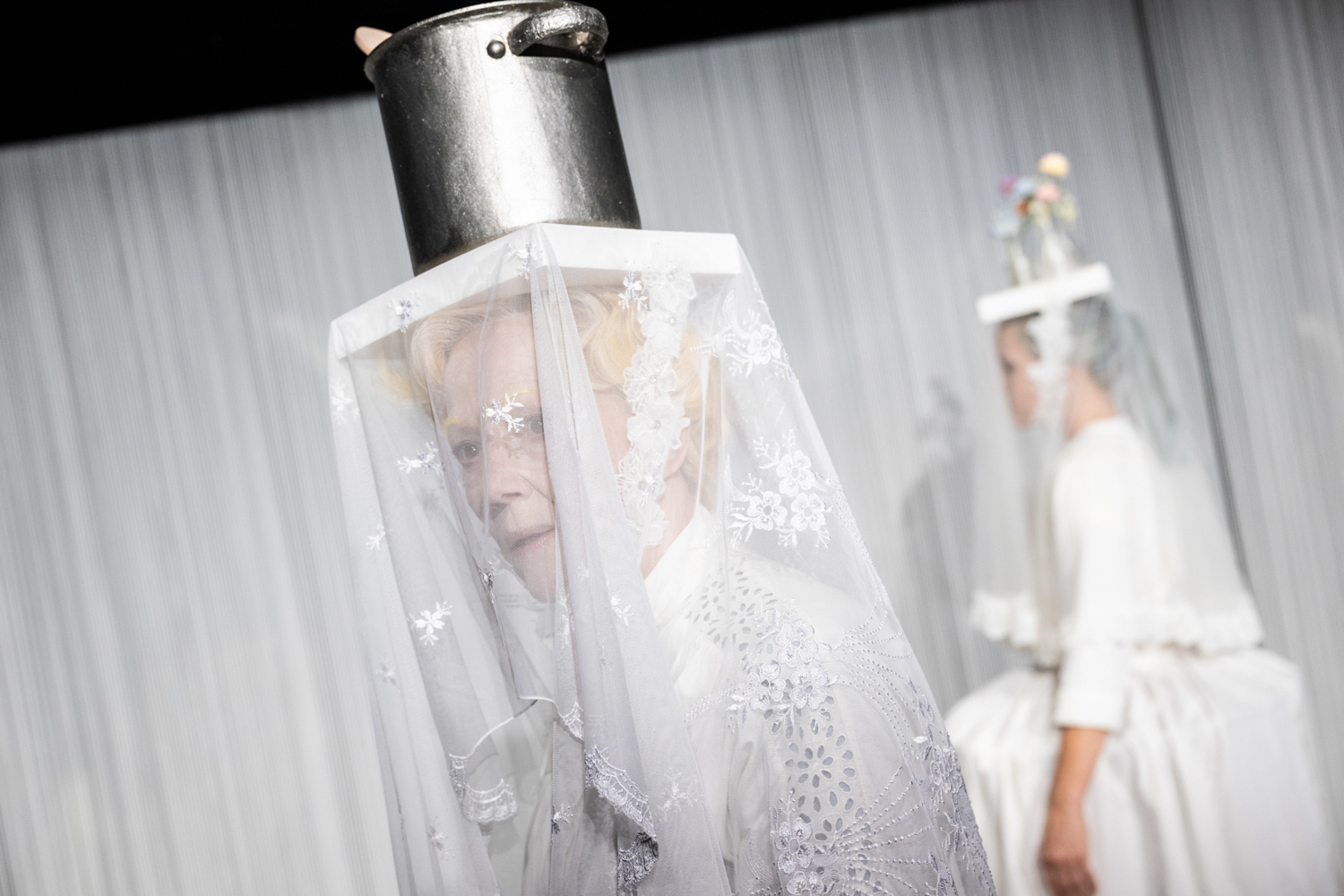
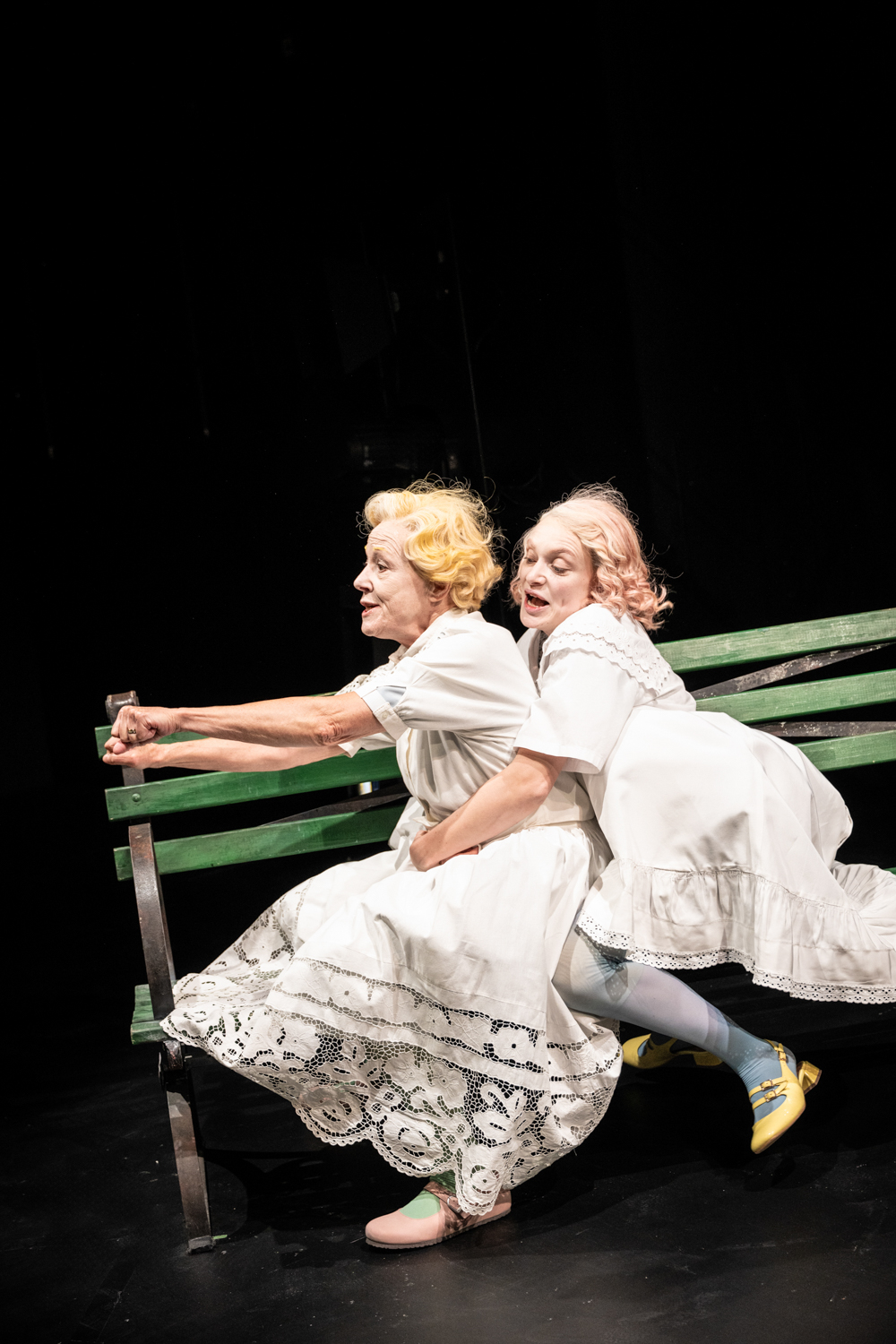
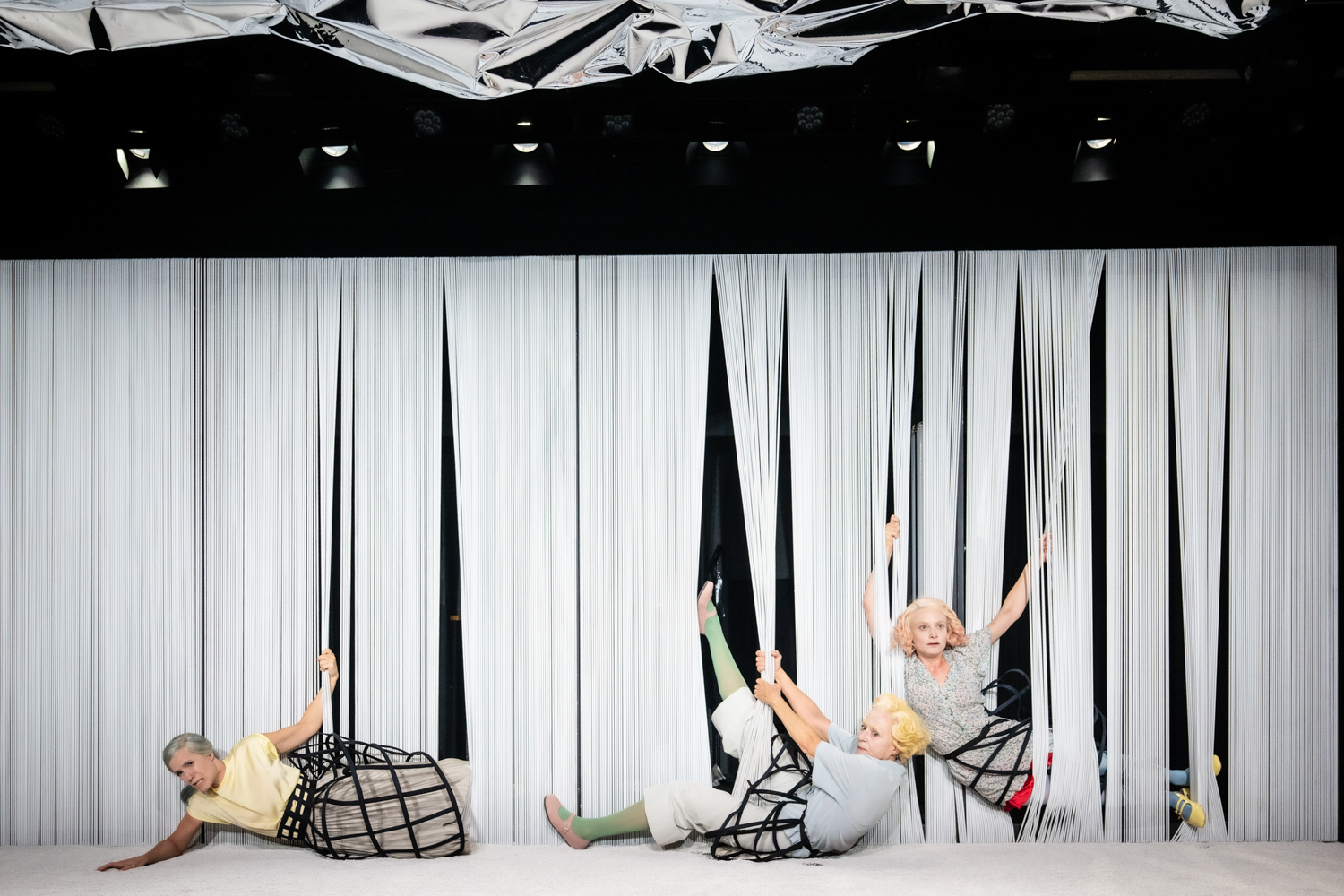
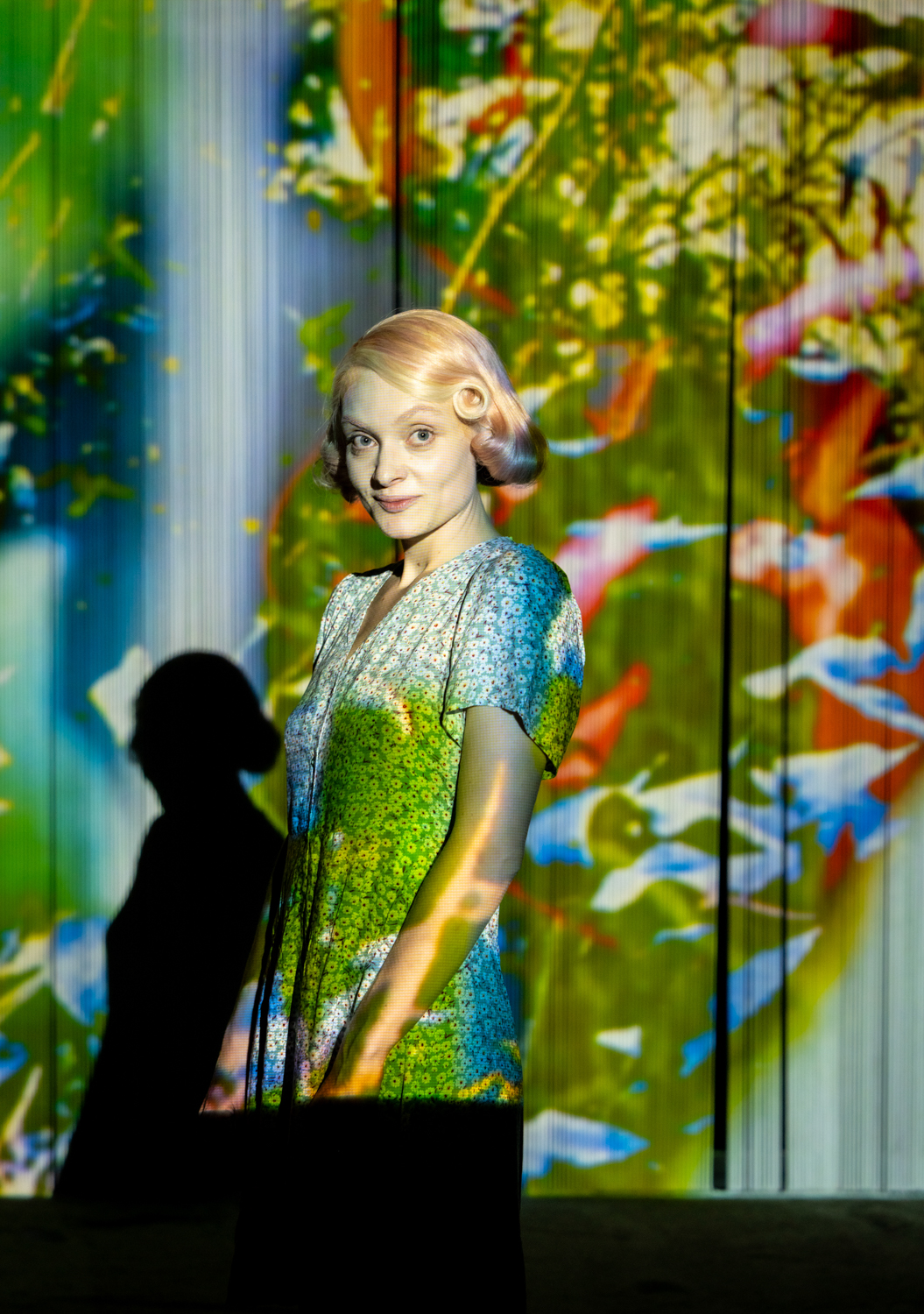
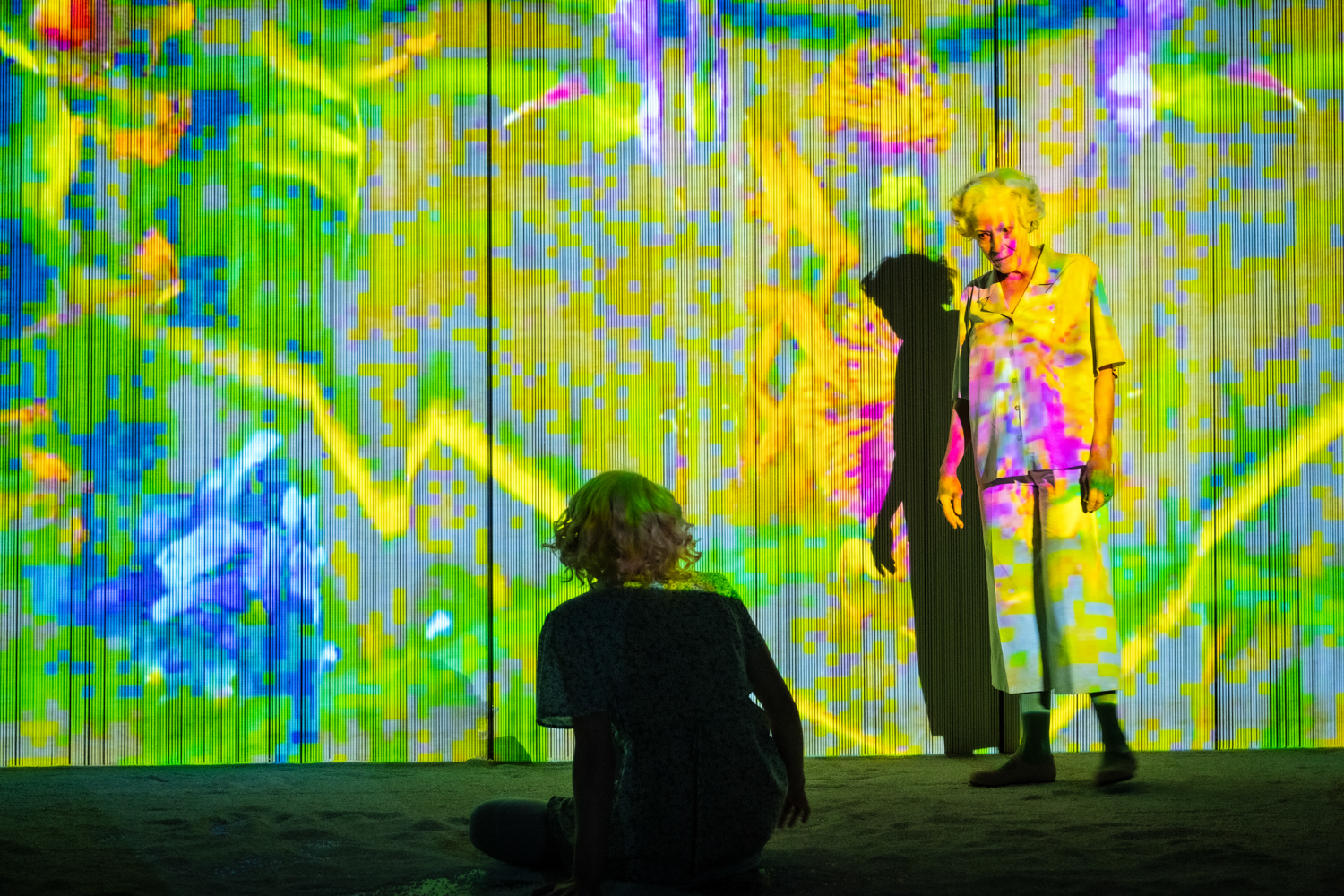
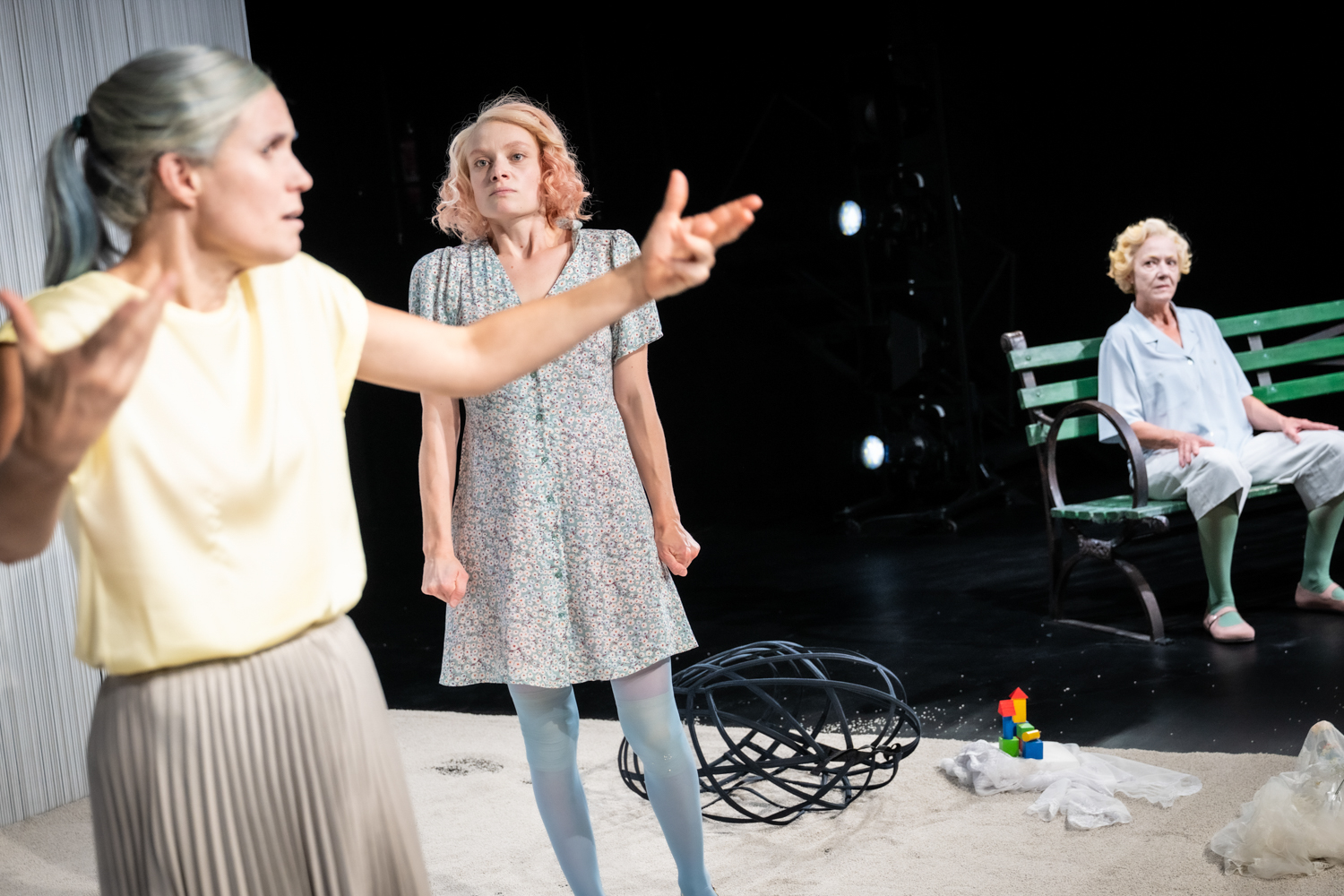
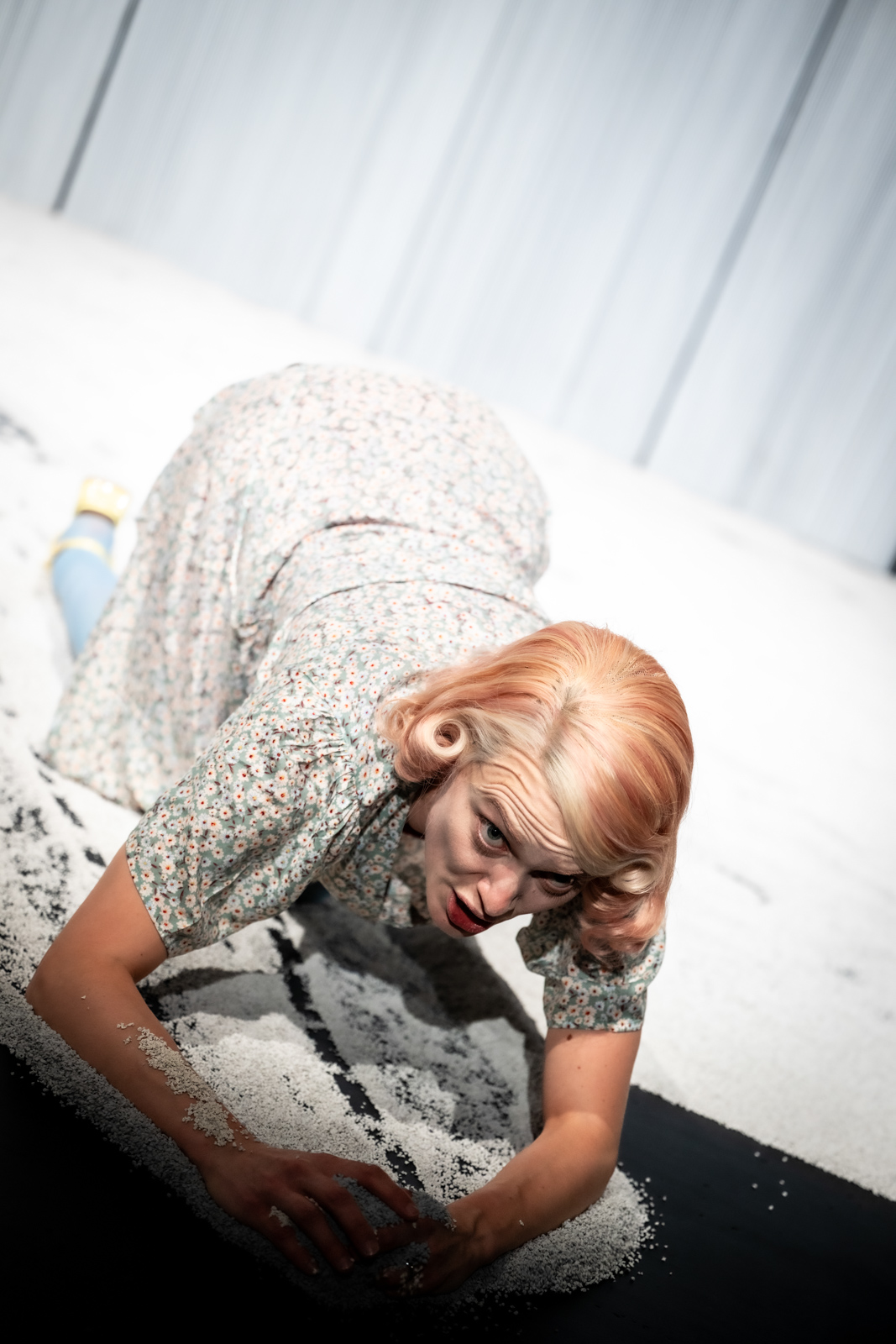
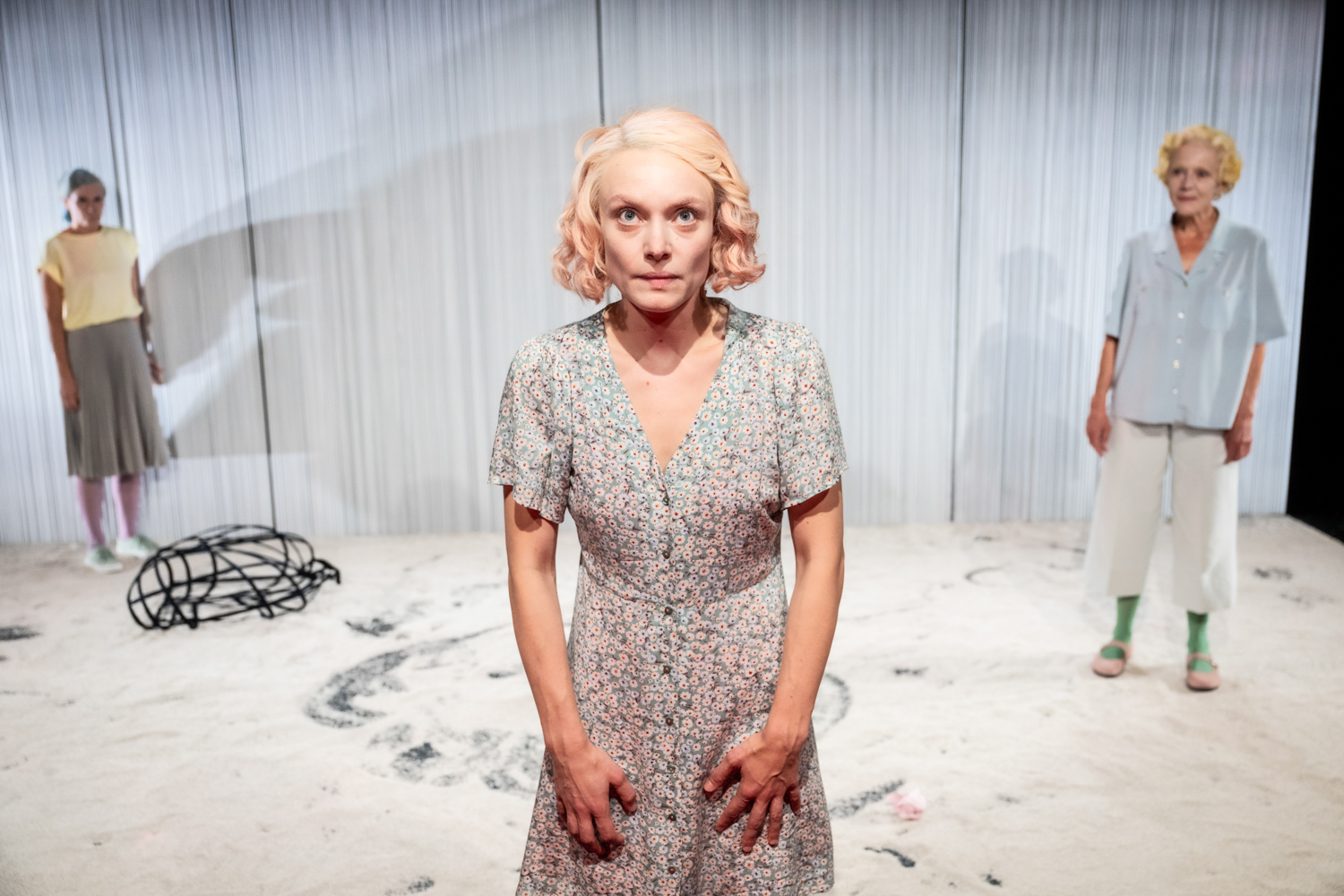
ca. 1 Stunde 20 Minuten keine PauseAlmost every day, a femicide takes place in Germany. With STAUBFRAU, Maria Milisavljević has written a poetic and powerful indictment of patriarchal violence, tracing its impact across three generations of women and exploring the struggle to break the cycle.
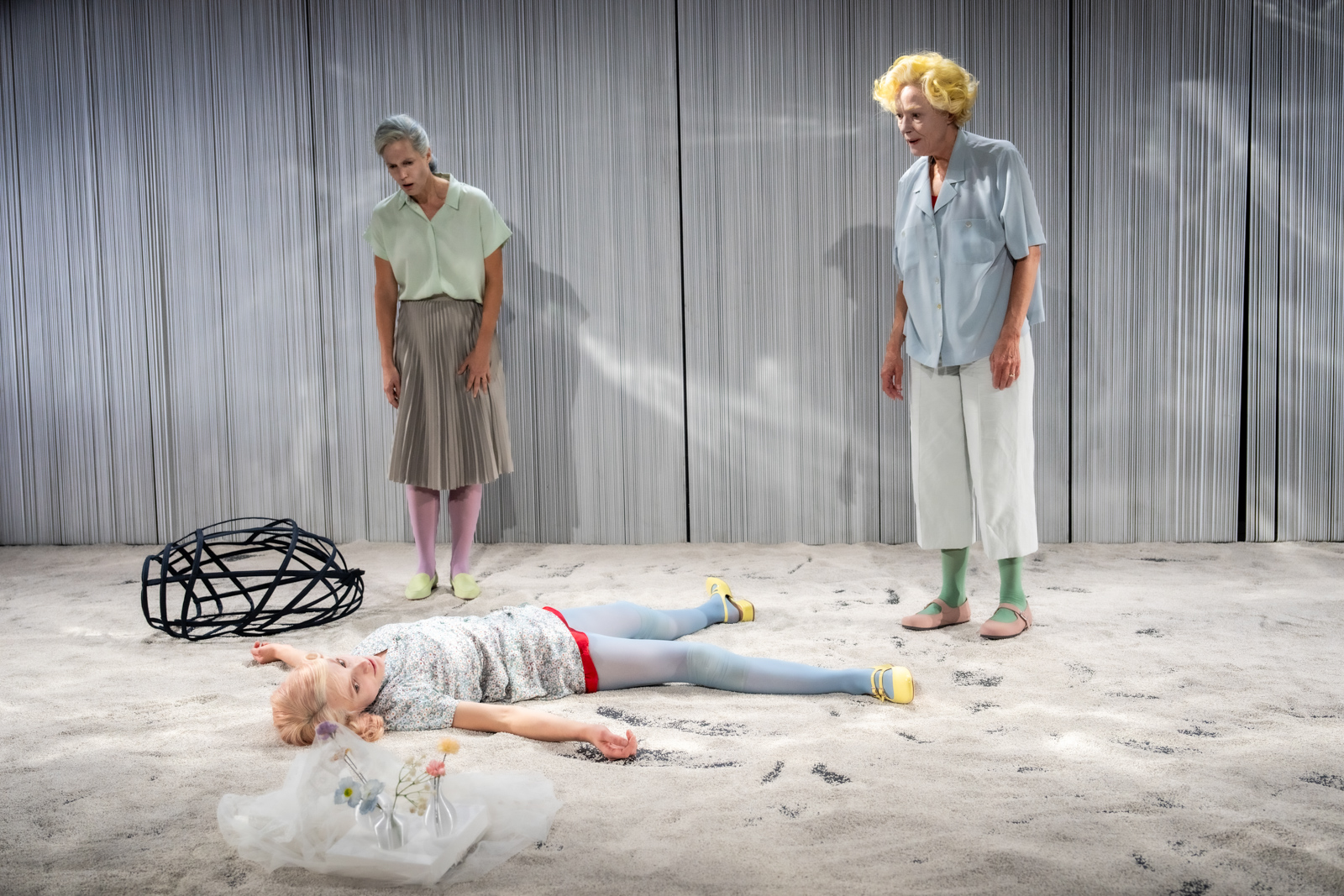
A river overflows its banks, bringing to the surface what has remained hidden on the riverbed for far too long: a red dress, a bicycle, a necklace, shoes worn through with holes—and the body of a woman. Perhaps more than one.
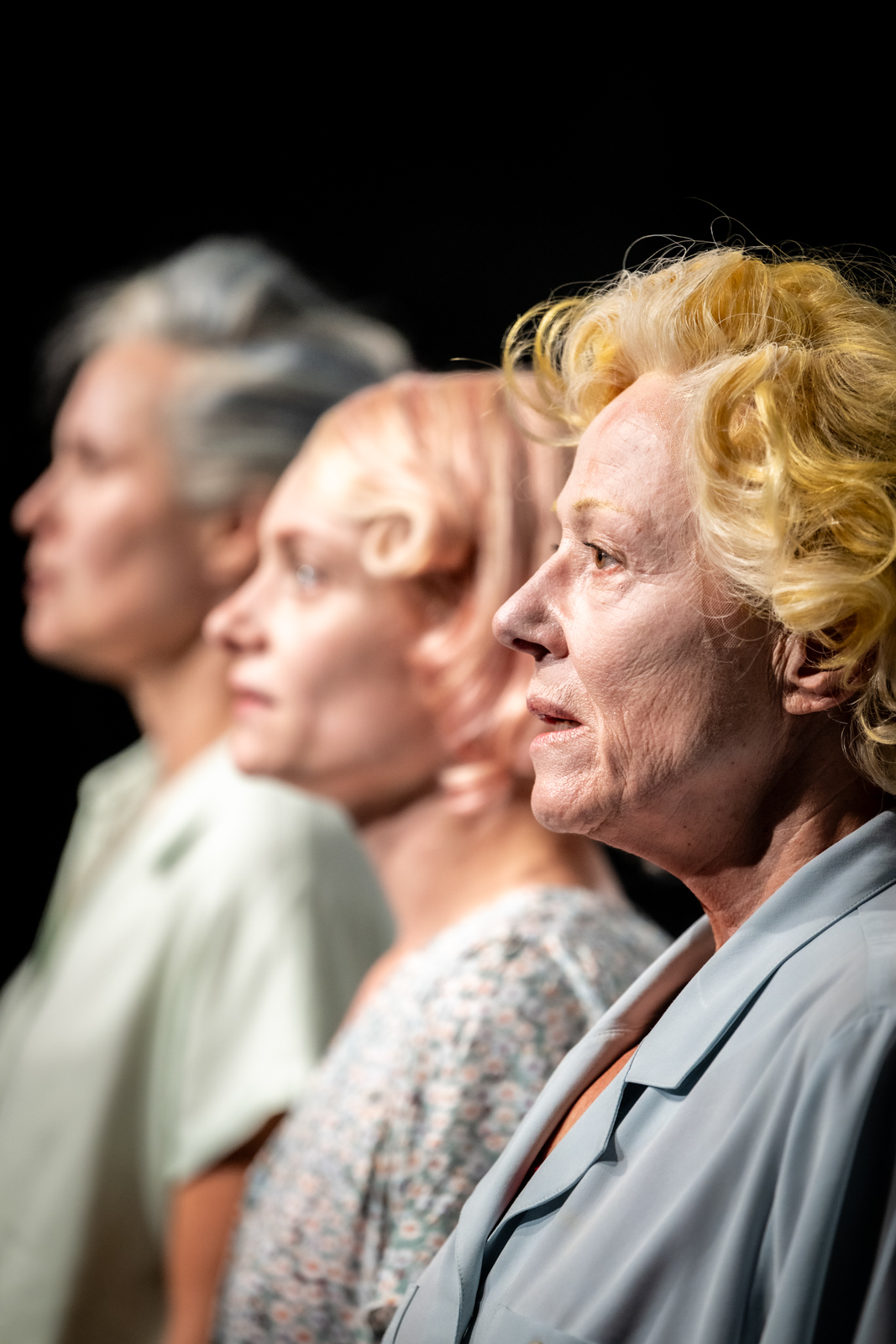
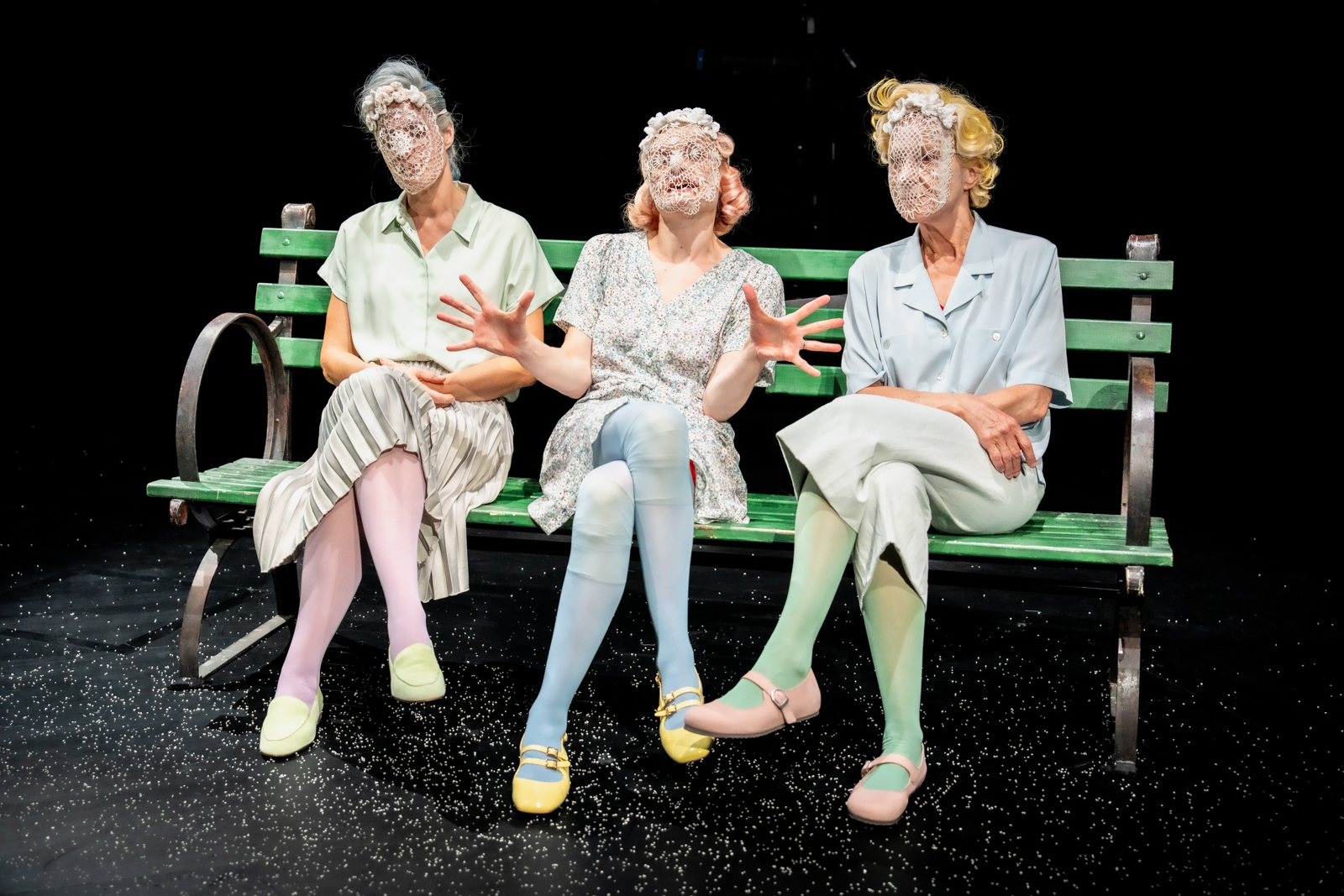
In STAUBFRAU, three generations of women and their stories converge in the ceaseless flow of the river. There is the grandmother, whose closest friend, as a young woman, was first awkwardly courted by a man, then raped, and finally murdered. There is the mother, who silently endured the humiliations and violence of her marriage, unable to find a way out. And there is the youngest generation, a mother, who is repeatedly subjected to domestic abuse. Struggling with the challenge of balancing paid work and care work, she longs to leave her husband, again and again. Yet doubts keep pulling her back: isn’t he a good father, admired by everyone around him? Is it really that bad? And isn’t she herself somehow to blame?
As time begins to run backwards, the clock counts down to 9:54 p.m., the moment her body turned to dust.
The women cannot escape the current of violence. Yet the youngest among them refuses simply to drift with it. She attempts to swim against the tide, to break free from patterns that generations of women have been taught to accept and internalize.
Femicide is often disguised as a crime of passion, a relationship tragedy, or a killing committed in the context of a breakup. But femicide is not a private tragedy—it is murder rooted in patriarchal structures. Violence against women is not a relic of the past. It persists into the present and continues to occur, most often, behind closed doors.
With STAUBFRAU, Maria Milisavljević created a polyphonic and poetic indictment of patriarchy—a powerful exploration of femicide and the structural violence faced by women. It is a play that refuses silence and insists that shame must change sides. Throughout her body of work, including plays such as STAUBFRAU and Blutschwester (Blood Sister), in which she explores violence against women and female rage, Milisavljević exposes the ways patriarchal structures permeate family life, medicine, the legal system, and the theater itself. At the same time, her work demonstrates how art can create visibility, agency, and a voice for women.
Maria Milisavljević is an internationally acclaimed and award-winning playwright whose works have been translated into numerous languages, including English, Spanish, French, Portuguese, Dutch, Serbian, Bulgarian, Japanese, and Korean. From 2013 to 2020, she served as playwright-in-residence at the Tarragon Theatre in Toronto, Canada. Her plays have been staged at leading European theaters, including the Deutsches Theater Berlin, Vienna’s Burgtheater, the Residenztheater Munich, and Schauspielhaus Zürich, as well as internationally in cities such as New York, London, Tokyo, and across Brazil and Mexico. Her work has been honoured with numerous awards, including the Kleist Prize for Young Playwrights, the Heidelberg Play Market Author’s Prize, and the Else-Lasker-Schüler Play Prize. In 2025, STAUBFRAU was awarded both the Mülheim Drama Prize and the Audience Award. In 2026, Milisavljević received the Else-Lasker-Schüler Drama Prize in recognition of her body of work.
Jula Marie Kühl is originally from Hanover, where she first performed in school plays and later appeared on stage in several youth productions at the State Theater. After graduating from high school in 2019, she moved to Aachen for a year to work as a volunteer in theater education and music outreach. During this time, she collaborated with actress Luise Berndt to stage William Golding’s Lord of the Flies with a group of young people from Aachen. In 2023, she completed her studies in dramaturgy in Leipzig and subsequently worked as an assistant director at Theater Bonn until 2026. There, during the 2024–25 season, she directed WIE MAN NACH EINEM MASSAKER HUMANISTISCH BLEIBT IN 17 SCHRITTEN by Maya Arad Yasur and played a key role in developing the assistant director program FREISCHWIMMEN.
Show more
Cast
Alina Heipe
Regie
Jula Marie Kühl
Ausstattung
Marie Häusner
Video
Clara Kulemeyer
Licht
Dominik Rose
Dramaturgie
Carmen Wolfram
Sarah Tzscheppan
Sarah Tzscheppan
Musik
Ada M. Helene Brack
Choreografie
Ben Rentz
Regieassistenz
Daniel Schulz
Ausstattungsassistenz
Clara Kulemeyer
Inspizienz
Klaus-Bjarne Kasch
René Fiegen
René Fiegen
Soufflage
Carlos Garcia Piedra
Show more
